 Home & Garden
Coaxial Cable
Contact
Home & Garden
Coaxial Cable
Contact
| Don's Home
Home & Garden
Coaxial Cable
Contact
|
Under Construction 
Coaxial Cable (coax) is the most popular type of transmission line for TV, CB and amateur radio. 300 ohm twin lead is also popular. The coax connects the receiver or transceiver to the antenna, dish or commercial Cable TV line. Coaxial Cable can come in many grades based on the type of shield, conductors and diaelectric.
| ||||||||||||||||||||||||||||||||||||||||||||||||||||||||||||||||||||||||||||||||||||||||||||||||||||||||||||||||||||||||||||||||||||||||||||||||||||||||||||||||||||||||||||||||||||||||||||||||||||||||||||||||||||||||||||||||||||||||||||||||||||||||||||||||||||||||||||||||||||||||||||
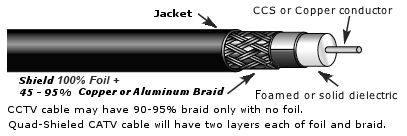 Other pictures at West Penn Wire |
Foam dielectric - More flexible, higher Velocity of Propagation. Stranded core - more flexible. larger core - lower resistance, and attenuation. Shielding - Layers and quality reduce noise and signal leakage. | |||||||||||||||||||||||||||||||||||||||||||||||||||||||||||||||||||||||||||||||||||||||||||||||||||||||||||||||||||||||||||||||||||||||||||||||||||||||||||||||||||||||||||||||||||||||||||||||||||||||||||||||||||||||||||||||||||||||||||||||||||||||||||||||||||||||||||||||||||||||||||
U - Solid Core
A/U - Stranded Core

3dB loss represents 1/2 the original signal
Specs within a cable type vary based on conductor size, construction and dialectric type.
Frequencies
40 m ham =  7 MHz
10 m ham = 29 MHz
      CB = 27 MHz (11 m)
  VHF TV = 54-88 MHz (4.3 m), 174-216 MHz (1.5 m)
 2 m ham = 144-148 MHz
  UHF TV = 470-806 MHz
Satellite TV = 950 to 1450 MHz - The higher frequency satellite signals
  are converted by the Low Noise Block Converter (LNB) at the dish
  to L-Band (1 GHZ) for transmission to the receiver.
Velocity Factor of Propagation (Vp) Through Coaxial CableSource: HamUniverse.com The velocity factor is the speed at which an RF signal travels through a material compared to the speed the same signal travels through a vacuum. The velocity of propagation is inversely proportional to the dielectric constant. Lowering the constant increases the velocity. Generally, the higher the velocity factor, the lower the loss through a coaxial cable. General Rules for Coaxial Cable D = diameter of insulation under the shield d = diameter of inner conductor. Velocity Factor, Velocity of Propagation, Vp The higher the velocity factor, the lower the loss through the cable. Raising the D/d has no effect on Vp Raising the dielectric constant lowers Vp Capacitance Raising the D/d ratio lowers capacitance Raising the dielectric constant raises capacitance Impedance Raising the D/d radio raises impedance Raising the dielectric constant lowers impedance Attenuation or Loss Raising the D/d ratio lowers attenuation Raising the dielectric constant raises attenuation Back to Antenna Lab Stranded wire core is more flexible. Solid or Stranded doesn't affect Propagation factor Some cables use copper covered steel (CCS) for strength. Quad cable (two layers of foil and braid) is not necessairly better depending on the quality of the foil and braid. Glossary:
attenuation- Signal loss
CATV - Community Antenna television
  Television service to homes via radio frequency signals sent through fixed
  optical fibers or coaxial cables as opposed to over-the-air radio waves.
CCS - Copper Coated Steel
CCTV - Closed-circuit television
     Typically used for surveillance cameras.
CFEP - Cellular Fluorinated Ethylene/Propylene copolymer
CL2 - Class 2 cable - low voltage (NEC Type)
CL2P - Class 2 plenum rated
CM - Communications Cable
dielectric constant - relative permittivity or
  a measure of how well the material insulates electrically.
FEP - Fluorinated Ethylene/Propylene copolymer (Teflon®)
HD-SDI - High Definition SDI
MP - Multipurpose cable
LL - Low Loss (same as LMR)
LMR - standard is a UV Resistant Polyethylene jacketed cable designed for 20-year service
         outdoor use. The bending and handling characteristics are significantly better
         than air-dielectric and corrugated hard-line cables.
         LLMR® is a trademark of Times Microwave Systems.
MATV - Master Antenna TV
NEC - National Electric Code
 Article 800 covers multi-purpose and communication cable.
 Article 820 covers community antenna television and RF cable. CATV cable
substituted with multi-purpose or communication listed coaxial cable.
Article 800
   800-3(b)1       CMX     Communications cable limited use
   800-3(b)1       CM      Communications cable
   800-3(b)2       CMR     Communications riser cable
   800-3(b)3       CMP     Communications plenum cable
OF -
PE - Polyethylene (Solid and Foam)
PU - Polyurethane
PVC - Polyvinyl Chloride
SBC - Solid Bare Copper
SDI - Serial Digital Interface (TV)
Vp - Velocity Factor, Velocity of Propagation
STC -  Stranded tin copper
See: Glossary of terms - Coax at Belden
See Also: Ham Radio Coaxial Cable Power Handling and Loss Specifications electromagnetic spectrum CCTV Cable and Differences in Coaxial Cables at West Penn Wire Attenuation at QSL Attenuation Chart at Davis RF wire Coaxial Cable at TWAcomm.com Coaxial Cable at ElectroCables.com wire Video Cables from the Inside Out Return to Home & Garden, Antennas, Amateur Radio or Personal Radio/CB
| ||||||||||||||||||||||||||||||||||||||||||||||||||||||||||||||||||||||||||||||||||||||||||||||||||||||||||||||||||||||||||||||||||||||||||||||||||||||||||||||||||||||||||||||||||||||||||||||||||||||||||||||||||||||||||||||||||||||||||||||||||||||||||||||||||||||||||||||||||||||||||||